Monday, 25 January 2010

Mise-en-Scène Overview

Costume: Girl (1) will wear comfortable light coloured clothing in the first scene to imply a sort of innocence and relaxing feel to her appearance, whereas later in the sequence her clothes will be dark coloured to emphasise the change in an almost "Jekyll and Hyde" style. Girl (2) will be wearing clothing which covers a minimal amount of body, for example a short skirt, a low cut top and heels, all these will give a vulnerable appearance.

Performance: The performance of girl(1) will again differ between the scenes. The church scene will involve girl(1) acting in a solomn fashion to show she is remorceful for something, although it is not known what it is. Her eyes and lips will constantly be moving to give the impression that there is something troubling her. In the frontroom scene her performance will be changed to reflect the personality change, she will now perform in a natural manner, sat in a comfortable, almost homely, position on the sofa, when the doorbell sounds, she should act slightly annoyed yet polite enough to act in a civilised way when answering the door.

Hair and Make Up: Hair and make up are similarly approached as the attitudes to costume. Girl (1) should have a small amount of natural looking make up applied and her hair set in a relaxed style whilst in the frontroom setting. However, the park scene should show the girl with her hair up in a messy fashion with dark eyes, possibly with imperfect make up, pale skin and yet blemished appearance. These techniques should show her decline into a mild form of madness; as a cause of the death of her father.

Lighting: All lighting styles will be limited by our low budget. However, artistic use of lamps, curtains and candles will give the desired affects for the scenes. As the opening scene was filmed during winter seasons the natural lighting was perfect as our thriller is designed to fit the general conventions of Hitchcocks thrillers, where the most tense scenes are set at night or dusk. Thus, all the lighting used during the entirity of our opening sequence is classed as “Low Key”.

Setting: None of our filming will occur in sets because we feel that we have knowledge of perfect settings. Also, the performance in the frontroom scene would be more natural in a setting where the actor is comfortable. Therefore, the use of one of the students front rooms was perfect. We used a local park during the “park” scene, Boston Manor park provides the perfect setting for our scene as there are many areas which are covered by trees and an area under the M4 Flyover section which provides areas where girl(1) can hide and an unusual setting for girl (2) to walk.

Props: There is at least one key prop in each scene, these are used as clues later in the film. The first scene involves a white head band and a remote control in the front room scene. A set of rosary beads in the church scene and a red jumper, the red jumper is also carried over into the park scene. Girl (1) is seen wearing this jumper in both scenes. The final prop in the park scene is the bottle of alcohol which girl (2) carries.

Appearance: The actors in our film have been specially chosen for their suitability for the profiles of the characters in the opening sequence. Girl (1) is played by Kate Blythe, aged 17. She looks younger than her age which adds an almost innocent feel to her person. Girl (2) is played by Carolina Garcia-Ocha, aged 19. Her body shape enables a good portrayal of character, yet her gender and age enables her to seem mature, yet vulnerable.

Wednesday, 20 January 2010

Existing Thriller Synopsis'

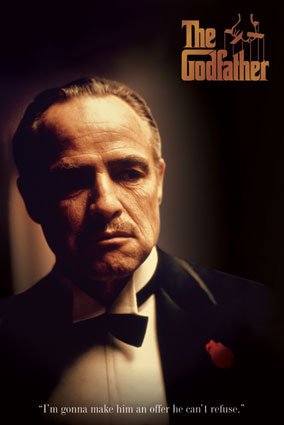
The Godfather

Vito Corleone (Brando) is the aging don of the Corleone Mafia Family. His youngest son Michael (Pacino) has returned from WWII just in time to see the wedding of Connie Corleone (Michael's sister) to Carlo Rizzi. All of Michael's family is involved with the Mafia, but Michael just wants to live a normal life. Drug dealer Virgil Sollozzo is looking for Mafia Families to offer him protection in exchange for a profit of the drug money. He approaches Don Corleone about it, but, much against the advice of the Don's lawyer Tom Hagen (Duvall), the Don is morally against the use of drugs, and turns down the offer. This does not please Sollozzo, who has the Don shot down by some of his hit men. The Don barely survives leading his son Michael to begin a violent mob war against Sollozzo and tears the Corleone family apart.

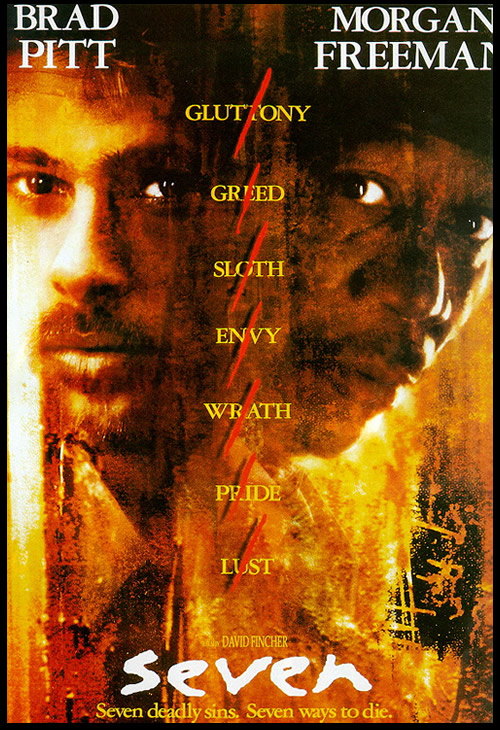
Se7en
Se7en is a psychological/crime thriller about two homicide detectives' desperate hunt for a serial killer who justifies his crimes as absolution for the world's ignorance of the Seven Deadly Sins. The movie takes us from the tortured remains of one victim to the next as the sociopathic "John Doe" sermonizes to Detectives Sommerset (Freeman) and Mills (Pitt) -- one sin at a time. The sin of Gluttony comes first and the murderer's terrible capacity is graphically demonstrated in the dark and subdued tones characteristic of film noir. The seasoned and cultured Sommerset researches the Seven Deadly Sins in an effort to understand how the killer operates while new Detective Mills doesn’t want to waste time trying to understand his motives but hunt the killer immediately and get him on death row.


The Sin Eater/The Order
Alex Bernier (Ledger) is a member of an arcane order of priests known as Carolingians. When the head of the order dies, Alex is sent to Rome to investigate mysterious circumstances surrounding the death. The body bears strange marks on the chest which may or may not be the sign of a Sin Eater (Furmann), a renegade who offers absolution, last rites and therefore a path to heaven outside the jurisdiction of the church. Alex enlists the aid of his old comrade Father Thomas (Addy) and of a troubled artist (Sossamon) upon whom he once performed an exorcism. He soon finds himself plunged into a mystery with him at the heart of it


The Sixth Sense
Dr. Malcolm Crowe (Willis) is a successful child psychiatrist and happily married to Anna(Williams). Returning home from an awards ceremony, Malcolm’s confronted by Vincent Grey, a distraught former patient who shoots Malcolm and commits suicide. Months later, a recovered Malcolm meets with Cole Sear (Osment), a shy and troubled 9 year-old boy. Cole has been experiencing disturbing situations he can’t fully understand. His mother, Lynn (Collette), is concerned about his withdrawn and fearful behavior and attributes it to her recent divorce and Cole being bullied by school classmates.
Initially, Cole is uncomfortable talking to Malcolm but comes to trust him and confides, "I see dead people." He says the ghosts don’t always know they are dead. Malcolm diagnoses Cole as delusional, noting he shares similar symptoms to Vincent Grey. Eventually, Malcolm realizes Cole really is able to communicate with the dead (as was Vincent). He believes the ghosts are benevolent and tells Cole the spirits somehow find their way to him for his help.

Monday, 18 January 2010

What is the BBFC

The BBFC ‘British Board of Film Classification’ is an independent organisation that regulate film and video in the UK.

The BBFC was set up in 1912 by the film industry as an independent body to classify films and set the limits to films and to bring a “degree of uniformity to the classification of film nationally.”

However local councils still have statutory powers which can overrule the BBFC’s dictions. They have the power to banned films and even cut.

The BBFC help guide the public and give them information to help them make dictions on if the film or game is suitable for them and people in their care. “We help to protect vulnerable viewers and society from the effects of viewing potentially harmful or unsuitable content while respecting adult freedom of choice.”

Information taken from www.bbfc.co.uk

BBFC

U – Suitable for all it is impossible to predict what might upset any particular child. But a ‘U’ film should be suitable for audiences aged four years and over. ‘U’ films should be set within a positive moral framework and should offer reassuring counterbalances to any violence, threat or horror. If a work is particularly suitable for a pre-school child to view alone, this will be indicated in the Consumer Advice.

U (Universal) Classification

Discrimination

No discriminatory language or behaviour unless clearly disapproved of.

Drugs

No references to illegal drugs or drug misuse unless they are infrequent and innocuous, or there is a clear educational purpose or anti-drug message suitable for young children.

Horror

Scary sequences should be mild, brief and unlikely to cause undue anxiety to young children. The outcome should be reassuring.

Imitable behaviour

No potentially dangerous behaviour which young children are likely to copy. No emphasis on realistic or easily accessible weapons.

Language

Infrequent use only of very mild bad language.

Nudity

Occasional natural nudity, with no sexual context.

Sex

Mild sexual behaviour (for example, kissing) and references only (for example, to ‘making love’).

Theme

While problematic themes may be present, their treatment must be sensitive and appropriate for young children.

Violence

Mild violence only. Occasional mild threat or menace only.


PG – General viewing, but some scenes may be unsuitable for young children unaccompanied children of any age may watch. A ‘PG’ film should not disturb a child aged around eight or older. However, parents are advised to consider whether the content may upset younger or more sensitive children.

PG (Parental Guidance) Classification

Discrimination

Discriminatory language or behaviour is unlikely to be acceptable unless clearly disapproved of or in an educational or historical context. Discrimination by a character with which children can readily identify is unlikely to be acceptable.

Drugs

References to illegal drugs or drug misuse must be innocuous or carry a suitable anti drug message.

Horror

Frightening sequences should not be prolonged or intense. Fantasy settings may be a mitigating factor.

Imitable behaviour

No detail of potentially dangerous behaviour which young children are likely to copy. No glamorisation of realistic or easily accessible weapons.

Language

Mild bad language only.

Nudity

Natural nudity, with no sexual context.

Sex

Sexual activity may be implied, but should be discreet and infrequent. Mild sex references and innuendo only.

Theme

Where more serious issues are featured (for example, domestic violence) nothing in their treatment should condone unacceptable behaviour.

Violence

Moderate violence, without detail, may be allowed, if justified by its context (for example, history, comedy or fantasy).


12AThe ‘12A’ category exists only for cinema films. No one younger than 12 may see a ‘12A’ film in a cinema unless accompanied by an adult, and films classified ’12A’ are not recommended for a child below 12. An adult may take a younger child if, in their judgement, the film is suitable for that particular child. In such circumstances, responsibility for allowing a child under 12 to view lies with the parent or guardian.

12A Certificate Classification

Discrimination

Discriminatory language or behaviour must not be endorsed by the work as a whole. Aggressive discriminatory language or behaviour is unlikely to be acceptable unless clearly condemned.

Drugs

Any misuse of drugs must be infrequent and should not be glamorised or give instructional detail.

Horror

Moderate physical and psychological threat may be permitted, provided disturbing sequences are not frequent or sustained.

Imitable behaviour

Dangerous behaviour (for example, hanging, suicide and self-harming) should not dwell on detail which could be copied, or appear pain or harm free. Easily accessible weapons should not be glamorised.

Language

Moderate language is allowed. The use of strong language (for example, ‘fuck’) must be infrequent.

Nudity

Nudity is allowed, but in a sexual context must be brief and discreet.

Sex

Sexual activity may be briefly and discreetly portrayed. Sex references should not go beyond what is suitable for young teenagers. Frequent crude references are unlikely to be acceptable.

Theme

Mature themes are acceptable, but their treatment must be suitable for young teenagers.

Violence

Moderate violence is allowed but should not dwell on detail. There should be no emphasis on injuries or blood, but occasional gory moments may be permitted if justified by the context. Sexual violence may only be implied or briefly and discreetly indicated, and must have a strong contextual justification.


15– Suitable only for 15 years and over.

No one younger than 15 may see a ‘15’ film in a cinema. No one younger than 15 may rent or buy a ‘15’ rated video work accompanying adult.

15 Certificate Classification

Discrimination

The work as a whole must not endorse discriminatory language or behaviour.

Drugs

Drug taking may be shown but the film as a whole must not promote or encourage drug misuse. The misuse of easily accessible and highly dangerous substances (for example, aerosols or solvents) is unlikely to be acceptable.

Horror

Strong threat and menace are permitted unless sadistic or sexualised.

Imitable behaviour

Dangerous behaviour (for example, hanging, suicide and self-harming) should not dwell on detail which could be copied. Easily accessible weapons should not be glamorised.

Language

There may be frequent use of strong language (for example, ‘fuck’). The strongest terms (for example, ‘cunt’) may be acceptable if justified by the context. Aggressive or repeated use of the strongest language is unlikely to be acceptable.

Nudity

Nudity may be allowed in a sexual context but without strong detail. There are no constraints on nudity in a non-sexual or educational context.

Sex

Sexual activity may be portrayed without strong detail. There may be strong verbal references to sexual behaviour, but the strongest references are unlikely to be acceptable unless justified by context. Works whose primary purpose is sexual arousal or stimulation are unlikely to be acceptable.

Theme

No theme is prohibited, provided the treatment is appropriate for 15 year olds.

Violence

Violence may be strong but should not dwell on the infliction of pain or injury. The strongest gory images are unlikely to be acceptable. Strong sadistic or sexualised violence is also unlikely to be acceptable. There may be detailed verbal references to sexual violence but any portrayal of sexual violence must be discreet and have a strong contextual justification.


18 – Suitable only for adults. No-one younger than 18 may see an ‘18’ film in a cinema. No-one younger than 18 may rent or buy an ‘18’ rated video.


18 Certificate Classification

In line with the consistent findings of the BBFC’s public consultations and The Human Rights Act 1998, at ‘18’ the

BBFC’s guideline concerns will not normally override the principle that adults should be free to choose their own entertainment. Exceptions are most likely in the following areas:

• Where the material is in breach of the criminal law, or has been created through the commission of a criminal offence

• where material or treatment appears to the BBFC to risk harm to individuals or, through their behaviour, to society – for example, any detailed portrayal of violent or dangerous acts, or of illegal drug use, which may cause harm to public health or morals. This may include portrayals of sexual or sexualised violence which might, for example, eroticise or endorse sexual assault

• Where there are more explicit images of sexual activity which cannot be justified by context. Such images may be appropriate in ‘R18’ works, and in ‘sex works’ (see below) would normally be confined to that category.

Sex education at ‘18’

Where sex material genuinely seeks to inform and educate in matters such as human sexuality, safer sex and health, explicit images of sexual activity may be permitted.

Sex works at ‘18’

Sex works are works whose primary purpose is sexual arousal or stimulation. Sex works containing only materials which may be simulated are generally passed ‘18’. Sex works containing clear images of real sex, strong fetish material, sexually explicit animated images, or other very strong sexual images will be confined to the ‘R18’ category. Material which is unacceptable in a sex work at ‘R18’ is also unacceptable in a sex work at ‘18’.

(Information taken from the official BBFC website- www.bbfc.com)

Target Audience for our Production

No film is for everyone. Each film has a target audience. The job of media producer is to know specifically who they are; a film cannot effectively communicate a message unless the makers know the group of people for whom it is being created.

As Alfred Hitchcock is a very influential name within the thriller genre we studied his film ‘Psycho’ for an insight into the typical audience for the thriller genre. The main target audience this film attained was between the ages of 18-35 due to its scenes of violence and terror. 

However, the film had been classified at the time of release, almost 50 years ago. Judging that the audiences of past and present have many subtle yet considerable differences, the film would be more likely to appeal to modern day audiences from the age of 15.

Before any ideas were drawn up we wanted to consider closely the target audience we were aiming our film towards. We chose a wide target audience of both males and females aged 15- 35. This age range is more likely to attend the cinema to see a film, particularly a film within the thriller genre.


Working tightly within the age classifications of the BBFC we are definite that our opening

sequence will not offend anyone within our age boundary, although our opening sequence will not feature much dialogue, the images and representations used may offend those who are sensitive to certain issues and we feel that those over the age of 15 will be able to understand the themes enough and are less likely to be affected by the issues featured.

Which Audiences are drawn to the Thriller Genre?

The type of audience that would watch a certain thriller depends highly on the subgenre the story is within. The audience that would watch an action thriller (e.g. The Dark Knight) is different to an audience that would watch a religious thriller (e.g. The Sin Eater), although both films share the same overall thriller theme they have very different sub genre’s, which have an entire different set of rules and conventions to follow, to give the audience what they want to see. Many different thriller sub genres appeal to a wide range of audiences, and those audiences are affected by many factors including:


Age

Age of the viewing audience is a great factor in determining what film genres they may be interested in. For thrillers I would have to say the age range would be 16+, as teenagers are maturing they are likely to watch films that require more attention and overall are more enjoyable to watch then younger themed films. Certain thriller sub genres appeal to the younger audience e.g. Action thrillers 16-30; crime thrillers follow a similar range 18-35, the top 3 voted thrillers on imdb.com are all crime thrillers. As the age range increases the action content within the films tends to fall, Action thrillers as genre suggests have a high action content, fight scenes, guns, explosions. Crime thrillers whilst still containing a moderate amount of action are more plot driven and the action just helps with the suspense along the way. Psychological and Religious thrillers are a lot more story driven compared to action thrillers and appeal to an older audience, as they are less interested in action and more interested in the story unfolding onscreen. Examples of good Psychological/Religious Thrillers include The Hannibal series including Silence of the lambs/Red Dragon/Hannibal, and The Da Vinchi Code/Angels and Demons


Gender

Gender is also seen as important when targeting a specific audience for a thriller. Generally I would say Action/Crime thrillers appeal much more to a male audience, the action-taking place in these sub genres contains violence, and can be off putting to women. Thrillers that would appeal to a female audience may be sub genres such as, low action Psychological thrillers, Religious Thrillers, Erotic thrillers such as Fatal Attraction and Basic Instinct where the female lead is a femme fatale are quite empowering for a female audience to watch, so action isn’t completely left out.

Do different approaches to opening sequences have different effects

Opening sequences play an important part in the movie as it can set moods and change the atmosphere. The main layout for the sandwich title is

  • opening ‘motif’
  • opening sequence action
  • titles.
This allows enigma codes to be set up as to what is going on. This is also independent from the main film. A good example would be the Bond films as the all have sandwich opening sequences. You always get a bit of action that sets up the story and allows audiences to gain information about the situation. This type of title work well with spy thrillers however ‘over black’ titles would not work but work for other thrillers
London to Brighton has ‘over black’ titles which have their advantages. This allows the action to be separated however unlike sandwich titles the action is part of the main plot. So the stages would be
  • Titles
  • Action
  • Tiles
  • Action.
Titles would include funding. Again like the sandwich titles this sets a lot of enigma codes but gives the audience restricted narrative as there is little action which is always breaking up. One of the main advantages is that it allows you to skip time and do flashback as you can easily jump back after each title.

Conventions of Opening Sequences

There are many different types of opening sequences that have been used in thriller movies. For example all ‘Bond’ films have an opening sequence that shows part of the title sequence then some action and then goes back to the titles. This is called a sandwich title.

Titles can also appear over black. This can be seen in the movie London to Brighton. Over black is when there is action and then suddenly titles appear in black over the screen, there is a lot a dialogue with fast cut editing this builds up to create an atmosphere of tension. A Psychological thriller such as Saw will have very little dialogue or no dialogue at all. This can have a strong effect on mood and tension. However will have a very strong score. Most opening sequences will contain a lot of enigma codes as this keeps the audience interested in the story and what is happening. For example in London to Brighton the audience ask why are the two girls are running and from what? Also perhaps why do they need to get out of London?

There are many different codes and conventions that have changed over the years when it comes to opening sequences. Back in the 1960’s and 70’s many films opened with long title sequences for example, James Bond ‘From Russia with love’ opens with a short title including funding then cuts to action before returns to titles. During the entire sequence the signature bond theme tune will be played, usually sang by the most popular female artist of that era. The title continue to include the whole cast; both primary and secondary, director of the film with all the producers, hair and makeup, casting, photographers and camera artists along with other less influential yet vital members of cast. However more modern films made in recent years don’t have so much information and the majority of cast names will appear in the credits. This can be seen from the movie London to Brighton. The information given in the opening titles are just the primary cast with director and producers. Information such as casting and hair& makeup along with secondary cast members appear in the credits.

Purpose of an Opening Sequence

The purpose of an opening sequence in a film is to establish the visual style of the film; it introduces characters, setting, narrative, genre and theme to the viewer. Opening sequences tend to be a short sequence of around 3-5minutes in length, that aims to capture the audiences attention and interest and draw them into the beginning of the story making them want to see it through.


Main characters are usually introduced in the opening, but not always, e.g. The Dark Knight; the main antagonist is introduced in the opening sequence as apposed to the protagonist. Opening sequences allow the audience to gain an understanding of the character or characters and allow us to follow their actions throughout the first opening minutes, which gives an insight into how they may act throughout the movie.


The general location of the movie may also be shown within the intro, e.g. Donnie Brasco, we are shown a montage of the main characters that drive the narrative, the montage also includes the setting in which the plot unfolds, New York and Miami.

Throughout the opening minutes many other factors come into play into introducing the audience to the movie, introducing characters, setting, but also the people behind the scenes.


Opening credits may or may not be used for varying effect, Minimal credits used in Phone Booth, only show us The Movie company and the Films title at the very first screen, almost getting them out of the way quickly, to not draw attention away from the action on screen. Others roll out the entirety of the cast and production crew at the very start. Credits can add another dimension to the opening, font, size and colour of credits can give the audience different feelings, white on black background for example, give a dark sad. Using bright colours can make the audience feel happy and child like, say for a children’s movie this approach may be used.


Sound and music is another important factor, much like colour used sounds can also express emotion into audiences, e.g. Donnie Brasco opens with a soft ballad and fades into sombre violins as the montage rolls, making the audience feel a certain way towards the protagonist and his surroundings.


The overall style, genre and theme of the movie is introduced in the first opening minutes, so it is vital the right message is given to the audience, If it’s a children’s movie, bright colours and happy songs may be used and played over the intro, if it’s a horror, dark colours, deep music and sound effects can all be used to scare the audience and let them know what they are in for.

Analysis of relevant opening sequences

Analysis of relevant opening sequences

I studied a number of opening sequences from films of the relevant thriller genre, after watching and analysing the brief clips I found that three main techniques were apparent in almost all of them in one way or another.

Lighting: In most films high key lighting is used, this style of lighting gives a glamorous effect to the actors and actresses, the lighting seems more normal or realistic with this technique. However, the majority of thriller films studied used low keys lighting. This technique provides sharp contrasts between dark and light areas; this increases suspense and tension, which is commonly associated with the thriller genre, the technique reinforces this feeling as it casts shadows and when used to its full potential can be very expressive.

Editing Techniques: As in most films continuity style editing is used in each of the opening sequences studied. Fast cut editing is used in some; this editing technique involves each shot lasting less than three seconds, this style of editing makes a sequence seem fast paced, and when teamed with kinetic camera movements can make the sequence seem panicky.

Sound: A very important aspect of the film in particular the opening sequence, it sets the mood of the film, sometimes it uses pleonastic sounds like in from Russia with love where the Russian spy gets closer to killing the fake bond which isn’t revealed until the end of the scene. Another important sound introduced in the opening sequence is the primary score; the score is used to set the scene and mood of the film.

Conventions of the Thriller Genre

Conventions of the Thriller Genre

Thrillers are sometimes set in exotic or unusual surroundings such as foreign cities, deserts, and high seas. The typical protagonists in most thrillers are usually a "macho males" who are well accustomed with danger: police officers, spies, soldiers, sailors or pilots. However, there are also times where the protagonist may be an ordinary person thrust into dangerous situations by a turn of events, most commonly seen within the plots of “psychological thrillers”. Whilst protagonists have traditionally been strong men, female “hero” characters have become increasingly common; for example Angelina Jolie in Tomb Raider and Vera Farmiga in Orphan.

http://www.youtube.com/watch?v=-Xs111uH9ss

Thrillers sometimes use the ideas of mystery stories, but are set apart after close examination of their plots and in recent years thrillers have become more strongly influenced by horror or psychological-horror where a “monstrous” element is included to make the suspense more evident. The monster could be anything, a supernatural entity, aliens, serial killers, or even a pandemic or simple virus.

CONVENTION ONE: DIALOGUE MEANS NOTHING “People don’t always express their inner thoughts to one another," Hitchcock states, "a conversation may be quite trivial, but often the eyes will reveal what a person thinks or needs.” The focus of the scene is hardly ever on what the characters are actually saying. Producers only resort to dialogue when it’s impossible to get the message across in any other fashion. "In other words we don’t have pages to fill, or pages from a typewriter to fill, we have a rectangular screen in a movie house,” said Hitchcock.

CONVENTION TWO: TWO THINGS HAPPENING AT ONCE

Tension can be built into a scene by using contrasting situations. Using two marginally unrelated events happening at once is a commonly used technique. The audience will be focused on the first one, and then interrupted by the other. The end result is - the audience pays more attention to what's happening.

CONVENTION THREE: SUSPENCE IS INFORMATION

Information is essential to Hitchcock’s air of suspense; introducing dramatic irony to the situation. Constant reminders of looming danger are used in order to build suspense.

In “Family Plot” Hitchcock shows the audience that brake fluid is leaking out of a car before the characters are aware. In “Psycho” (Hitchcock) the audience knows about the crazy mother character before the detective does, making the following scene where the detective visits the house one of the most successful suspense scenes of Hitchcock's entire career.

“The essential fact is to get real suspense you must let the audience
have information."
-Alfred Hitchcock

CONVENTION FOUR: SURPRISE, TWIST AND MYSTERY

Once the audience is readily set by the use of gripping suspense it must never end the way they expect. The bomb will never go off! The audience is led in one direction and then span into a completely different one. In the climax scene of “Saboteur” by Hitchcock, Norman Lloyd is cornered on the top of the Statue of Liberty and held at gunpoint by Robert Cummings. Just when the audience thinks his fate is set, Cummings speaks, this startles Lloyd and he plummets over the edge.

What is Sub Genres

What is Sub Genre:
Sub genre is a variation of an already established genre such as action. They follow many of the same codes and conventions which is linked to the genre but also follow different codes and conventions which are unique to there sub genre an example of sub genres of Horror include zombie vampire and paranormal.

The thriller genre has many different sub genres. They sometimes cross into each other they include:

Action Thriller: This sub genre tends to have stories with a protagonist and antagonist. There is a lot of violence and other elements such as car chases and characters working against time, a lot of action thriller cross into other genres such as spy and example is the bond films

Drama Thriller: The stories are very slowed paced and you learn a lot about the characters. Its can be seen as restricted viewing as we learn new developments with the characters. Examples of Drama thrillers are Disturbia and Gone Baby Gone.

Legal Thriller: Many of the films consist of a lawyer, the protagonist fighting a legal battle with the antagonist, were it is important not to win the case but also because his life may depends on it and possible his family. Examples include, The innocent man


Psychological Thriller: This sub genre often involves a lot of emotional and psychological suspense then actual physical suspense. Alfred Hitchcock was known for this type of thriller examples of his are. Strangers on a train.

Religious Thriller: These movies have story lines related to so religious theory or prophecy. It often contains religious objects as key to the story line. May stories use religious symbols as we all associate them with thriller and also they have a natural feel of uncertainty. May of the films cross into other genres such as horror and action. Examples of films are stigmata.